Consumers are increasingly using AI to research products, compare options, and evaluate brands. Which means answers from platforms like ChatGPT and AI Overviews are shaping brand perception.
These AI answers can influence how buyers think about your company before they ever visit your website.
AI sentiment analysis helps marketers understand how AI platforms describe their brand, which narratives those systems reinforce, and where inaccurate or negative perceptions may affect business results.
What is AI sentiment analysis?
AI sentiment analysis is the process of evaluating how favorably AI platforms describe your brand and whether those descriptions are accurate.
For example, an AI platform may describe Notion’s project management tool as “good fit for SMBs and mid-market teams” along with “strong automations” while also claiming it’s “not always the best choice for enterprises” and offers “less depth and rigor” than specialized enterprise tools.

All of these brand descriptions — whether totally true or hallucinated by AI — can shape buyers’ perception of your brand.
Conducting this analysis allows marketers to identify the negative narratives or inaccuracies surrounding their brand and then take action to fix misconceptions and improve their AI sentiment.
Why does AI sentiment analysis matter?
AI brand sentiment analysis matters because potential customers that research with AI are influenced by the way AI platforms describe brands and competitors.
Semrush’s recent survey of 1,000+ U.S. consumers found that:
- 57% use AI to narrow down product choices
- 53% use it to compare products they’re already considering
- 50% use it to help make final purchasing decisions
This means AI-generated descriptions influence consideration and conversions.
Coalition Technologies saw just how influential AI platforms’ responses can be for one of their clients. ChatGPT was repeatedly describing the company's military surplus sleeping bags as "outdated technology" because ChatGPT was associating the word "surplus" with obsolete equipment rather than authentic military-grade gear.
| "We had to refresh messaging on the about page, homepage, and social profiles to steer those responses back toward accuracy." - Jordan Brannon, President at Coalition Technologies |
The work Coalition Technologies did to better represent the client’s sleeping bags helped increase AI referral traffic by 429% and conversions from AI traffic by 547%.

How to analyze brand sentiment in AI answers and across the web
To understand AI sentiment, you need to look at both AI-generated answers and the sources that influence them.
AI platforms build their descriptions of brands using information from across the web.
Analyzing AI answers helps you understand how those platforms currently describe your brand, while monitoring sentiment across the broader web helps you understand what may be shaping those perceptions.
Together, these two views provide a more complete picture of how AI platforms perceive your company and where inaccurate or negative narratives may originate.
Manually check sentiment in AI answers
You can start by manually testing prompts across AI platforms.
Ask questions related to your category, competitors, ideal use cases, and brand. For example, you might ask about the best project management software for remote teams.

Reviewing those responses can help you understand:
- Whether your brand appears in relevant AI answers
- Which competitors appear alongside you
- What strengths, weaknesses, and narratives AI systems associate with your company
However, manual analysis becomes difficult to maintain across hundreds or thousands of prompts. That's where platforms like Semrush become useful.
Measure sentiment in AI answers at scale
Semrush’s AI Visibility Toolkit includes a set of reports to help marketers measure how AI platforms describe their brand.
Go to Brand Performance to see how AI platforms currently position your brand relative to competitors.
The “Share of Voice vs. Sentiment” chart gives you a high-level view of how often you’re mentioned and how positively you’re mentioned relative to rivals.

And the “Overall Sentiment” section breaks mentions into favorable or general.

Next, go to the Perception report to understand what factors are driving positive and negative sentiment.

Review the “Favorable Sentiment Over Time” chart to monitor how AI platforms’ perception of you shifts over time.

Measure sentiment in web mentions
AI platforms can describe brands based on their training data and information from across the web.
That means in addition to your website, third-party reviews, media coverage, forums, comparison articles, and social media discussions can all influence how AI platforms describe your company over time.
Use Semrush’s Media Monitoring tool to track how your brand is described across those third-party sources. The tool helps you monitor your online brand mentions and their overall sentiment over time.
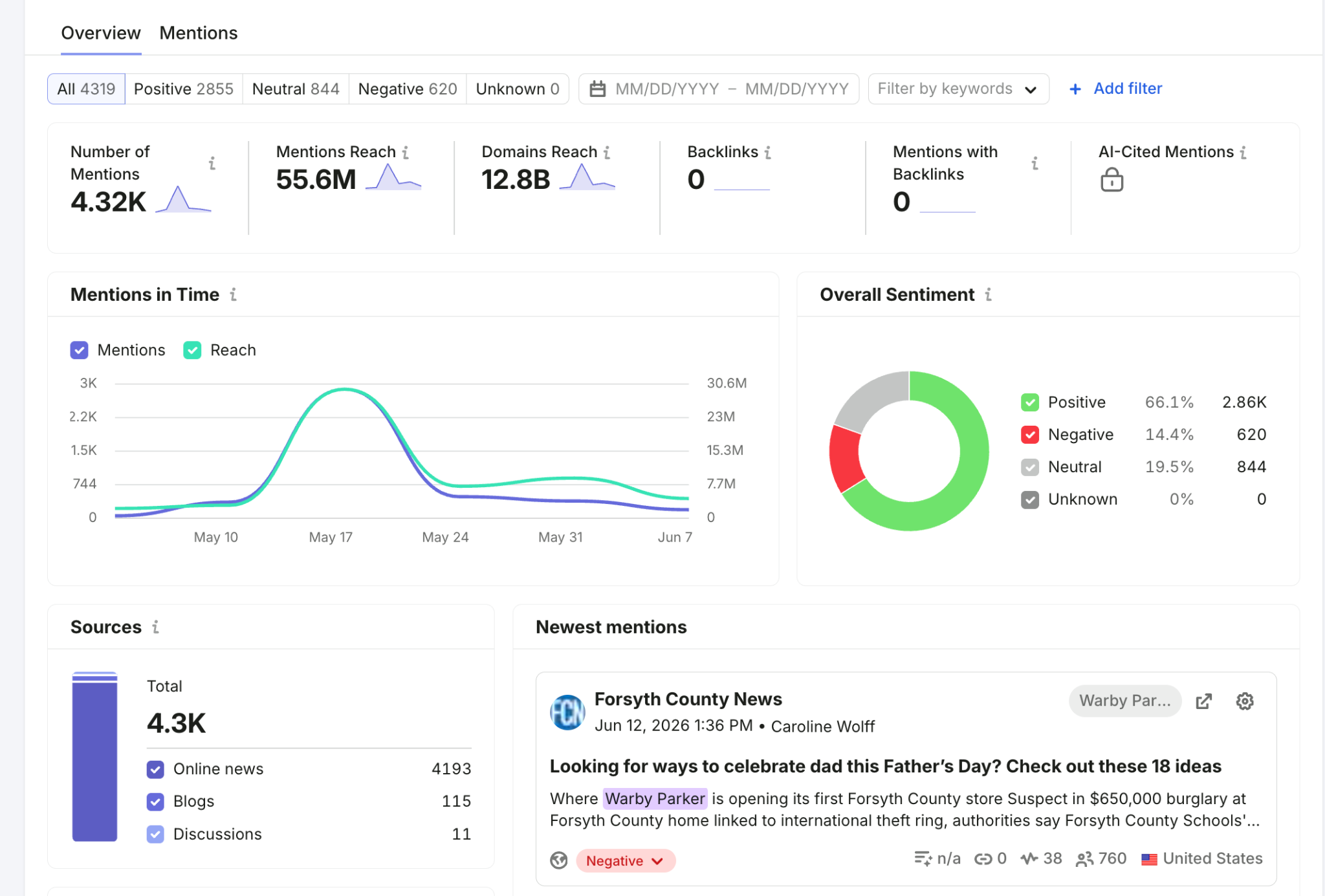
Monitoring brand mentions can help you spot emerging reputation issues early, understand how brand perception is changing, and identify negative narratives before they become more widespread and start to influence your brand sentiment across AI answers.
How to improve your brand’s AI sentiment
Improving AI brand sentiment comes down to finding the sources that drive the narratives, strengthening your own content, and improving the quality of your third-party mentions.
1. Find the sources influencing AI sentiment
Before you can improve AI sentiment, you need to understand which sources are shaping it.
Use the Narrative Drivers report to see which pages AI platforms rely on when describing your brand. Some will be owned properties, such as your homepage and product pages.
Others will be third-party sources, including review sites, media coverage, and forums.

Pay particular attention to sources associated with negative sentiment or inaccurate descriptions.
Filter for low sentiment scores to identify pages that may be contributing to negative or misleading AI narratives.

For owned pages, look for:
- Outdated claims
- Vague positioning
- Weak product explanations
- Missing context
- Ambiguous wording
For third-party sources, look for:
- Recurring criticisms or complaints
- Inaccurate descriptions of your products or services
- Outdated information
- Comparisons that position competitors more favorably
- Misunderstandings that repeatedly appear across multiple sources
These issues can influence how AI platforms describe your brand. Once you identify the sources driving those narratives, you can prioritize which pages, platforms, and messages need attention first.
For enterprise teams managing multiple brands, markets, or product lines, Semrush Enterprise AIO provides the same visibility across a larger set of brands and AI prompts.
2. Strengthen your owned content
Some of the narratives AI platforms associate with your brand can even come directly from your website.
If important details are missing, unclear, or outdated, AI platforms may fill those gaps using assumptions or information from third-party sources.
Focus on making it easier for AI platforms to accurately understand what your company does, who it serves, and what makes it different.
To strengthen owned content:
- Clearly and consistently explain what your product or service does
- Define who it's for and which use cases it supports
- Add missing context that could otherwise be filled by assumptions
- Replace vague marketing language with specific descriptions
- Keep product information, features, and positioning up to date
- Ensure important information appears on the pages AI platforms are most likely to cite
Zbyněk Fridrich's team followed this approach with WorkLounge, a coworking space that was having AI misrepresent some of their services.
They rewrote roughly 90 pages to better explain details such as 24/7 access, quiet zone availability, phone booths, and membership benefits.
Over the following months, the brand’s favorable AI sentiment % increased from 67 to 82, while AI visibility and referral traffic also improved.

When AI can’t confirm specific details about your products or services, a precise set of updates to key details can have a positive impact on favorable AI sentiment.
3. Improve your third-party presence
Remember, the narratives that AI platforms associate with your brand won’t just come from your website. Third-party platforms like review sites, forums, comparison sites, and other third-party sources also influence how AI platforms describe your company.
While you might have limited control over those conversations, you can influence them by improving how your brand is represented across the web.
That may involve:
- Updating third-party business profiles and listings
- Responding to reviews and customer feedback
- Correcting inaccurate information where possible
- Contributing expert insights to industry publications
- Earning coverage from trusted media outlets
- Participating in relevant industry communities and forums
The goal is to make sure customers and AI platforms encounter accurate and up-to-date information wherever they learn about your brand.
Over time, having consistent third-party narratives can reinforce the positioning and messages you want AI platforms to associate with your company.
FAQs
How is AI sentiment different from traditional sentiment analysis?
Traditional sentiment analysis measures what people say about your brand across the web. AI sentiment analysis measures what AI platforms say about your brand.
What causes negative AI sentiment?
Common causes of negative AI sentiment include:
- Outdated messaging
- Unclear positioning
- Negative third-party reviews
- Inaccurate forum discussions
- Missing or incomplete information on owned pages, which can lead AI platforms to rely on assumptions or third-party sources when describing your brand
Can you improve AI sentiment without controlling third-party sources?
Yes, you can still improve AI sentiment without controlling third-party sources. While you can't directly control what third-party websites say about your brand, you can improve how AI platforms describe you by making your own content more accurate and complete.
Updating owned pages, correcting missing or unclear information, and ensuring key product and brand details are consistently reflected across trusted third-party sources can influence the narratives AI platforms rely on over time.
How often does Semrush update AI sentiment data?
The Brand Performance reports refresh weekly across ChatGPT, Google AI Mode, Gemini, and Perplexity.
